
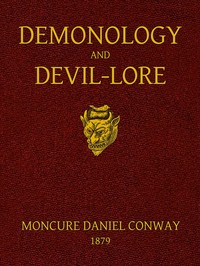
Demonology and Devil-lore by Moncure Daniel Conway
Forget everything you think you know about Satan. Moncure Daniel Conway's Demonology and Devil-Lore isn't a guide to summoning demons or a fire-and-brimstone sermon. Instead, it's a sweeping historical and cultural investigation. Published in 1879, Conway, a former minister turned religious freethinker, sets out on a massive project: to trace the evolution of the concept of the devil from its earliest roots to the Victorian era.
The Story
There isn't a traditional plot, but there is a compelling narrative thread. Conway acts as a guide, leading us through a museum of global myths and religions. He starts with ancient nature spirits and dualistic gods from Persia, then moves through Babylonian legends, Greek myths, and early Jewish folklore. He shows how figures like the serpent in Eden or the rebellious angels weren't originally supreme evils, but often represented older, conquered beliefs. The book argues that the Christian devil as we know him was constructed over centuries, absorbing traits from pagan gods like Pan (the horns and hooves) and political caricatures of rivals. It's the story of how a symbol is born, changes, and is used.
Why You Should Read It
This book is surprisingly relevant. It made me see modern 'monsters' and villains in a new light. Conway's core idea is that we create devils to embody whatever we fear or oppose. Reading it, you start to see this pattern everywhere, from politics to pop culture. His writing is clear and packed with examples, though it's a product of its time (some 19th-century attitudes are noticeable). The thrill isn't in spooky tales, but in the 'aha!' moments when you see the connections. It turns theology and myth into a kind of intellectual archaeology.
Final Verdict
This is a perfect read for curious minds who love history, mythology, or religion. If you enjoy shows or podcasts that pick apart the origins of stories, you'll love this. It's not a light beach read—it demands some attention—but it's incredibly rewarding. Skip it if you're looking for a straightforward religious text or a horror anthology. But if you want to understand why the devil has so many faces, and what they all really mean, Conway's classic tour is still one of the best journeys you can take.
Legal analysis indicates this work is in the public domain. Knowledge should be free and accessible.
Noah Miller
8 months agoLoved it.
Margaret Robinson
8 months agoBased on the summary, I decided to read it and the storytelling feels authentic and emotionally grounded. I couldn't put it down.
Susan Anderson
1 year agoSimply put, the character development leaves a lasting impact. Exactly what I needed.








Joshua Thompson
1 year agoFinally found time to read this!