About 236 minutes
The Robbers — Themes and Context
Science Fiction Utopias
54,166 recorded words. 24 minutes difference from this book's estimate.
View Gutenberg source #6782
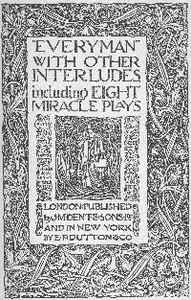
The catalog record for "Everyman," with other interludes, including eight miracle plays — Inside the Classic provides practical reading context through 59,615 words, 4 hr 20 min estimated reading time, and 15 detected text sections.
The text analysis averages about 18.2 words per sentence, while the detected sections provide another way to judge how the source is divided.
Project Gutenberg metadata also associates the work with “Mysteries and miracle-plays, English,” connecting these edition facts with the source record’s subject description.
Explore this collection
These alternatives are selected using recorded categories and estimated reading time.
About 236 minutes
Science Fiction Utopias
54,166 recorded words. 24 minutes difference from this book's estimate.
View Gutenberg source #6782About 231 minutes
Science Fiction Utopias
53,118 recorded words. 29 minutes difference from this book's estimate.
View Gutenberg source #4011About 226 minutes
Science Fiction Utopias
51,820 recorded words. 34 minutes difference from this book's estimate.
View Gutenberg source #4081Search stored excerpts and compare books → Choose by your preferences →
Choices use stored catalog measurements. Estimates vary with reading speed. A shared category is a catalog label, not a claim that two books have the same argument or literary quality.
Search reads excerpt text stored with this catalog and links to its associated Gutenberg record. The connection is stored in the site database; this tool does not recheck that every excerpt is word-for-word identical to that external record. Excerpt search does not cover every chapter and does not verify historical publication dates.
Catalog snapshot checked: 2026-09-25. Coverage: 94 public books, 94 available source excerpts.
Read the complete public-domain text at its original source.
Read on Project GutenbergErnest Rhys's 1909 edition of 'Everyman' and eight miracle plays presents these medieval dramas not as museum pieces but as works meant to be seen and heard in a crowded town square. The introduction insists that 'these old plays hide under their archaic dress the human interest that all dramatic art, no matter how crude, can claim when it is touched with our real emotions and sensations.' Rhys draws attention to the original performance conditions—Whitsuntide or Corpus Christi pageants in Chester, Coventry, York—and the craftsmen who acted them. The selection includes six plays from town cycles, offering a cross-section of biblical episodes from the Nativity to the Crucifixion, alongside the moral allegory of Everyman. Readers are encouraged to approach these texts as scripts for a living theatre, not as static literary relics.
Rhys's edition foregrounds the physical and social context of performance. The plays were originally staged on movable wagons in market squares, with guildsmen doubling as actors. The introduction notes that these pageants were 'played to commons and countrymen accustomably before,' and that their 'office as the begetters of the greater literary drama' has been fully studied, but their living quality is less appreciated. The editor urges readers to imagine themselves 'set in the street or market-square by the side of the commons and countrymen.' This emphasis on communal, outdoor staging shapes how one reads the dialogue: characters often address the audience directly, and stage directions are minimal, implying fluid movement between wagon and crowd. The Wakefield Crucifixion, for instance, opens with Pilate commanding 'Peace I bid every wight; / Stand as still as stone in wall,' a line that both controls the onstage crowd and acknowledges the real spectators.
The miracle plays are marked by sudden shifts from solemnity to coarse humor and graphic violence. In the Coventry play of the Massacre of the Innocents, the soldiers boast of slaughter while the mothers fight back with 'pot ladle' and 'womanly gear,' threatening to 'make his brain addle.' The language is colloquial and forceful: one soldier says 'I in hands once them hent, / Them for to slay nought will I spare.' The Wakefield Crucifixion intensifies this brutality. The torturers mock Jesus as a 'false chuffer' and 'false quantyse,' while Pilate threatens the audience with 'pains that never e'er was seen.' The plays do not flinch from depicting physical suffering, yet they also undercut authority with irreverent speech. Herod's rage is rendered almost comically: 'Saddle my palfry, for in haste will I go / After yon traitors now will I ride.' This blend of terror and farce is a hallmark of the cycle tradition.
A striking structural feature across the plays is the use of formal proclamations and audience commands. Pilate's opening speech in the Crucifixion—'Peace I bid every wight; / Stand as still as stone in wall'—echoes similar announcements in other pageants. These lines establish authority while also acknowledging the presence of a live crowd. The pattern recurs in Herod's scenes, where the herald announces 'All thy deeds is come to nought,' and in the morality play Everyman, where Death's summons is a direct address to the protagonist. The plays also rely on parallel constructions: soldiers report to their king in nearly identical terms ('Lo! Herod, king! here must thou see / How many thousands that we have slain'). This repetition reinforces the ritualistic nature of the drama, where each episode follows a known biblical outline but is filled with local, vernacular detail. The editor's selection highlights how these patterns create a rhythm of command, rebellion, and lament.
The plays constantly juxtapose sacred story with everyday life. In the Massacre of the Innocents, the mothers' domestic weapons—a pot ladle—are set against the soldiers' swords. The Wakefield Crucifixion mixes Pilate's grandiose self-description ('I am a lord that mickle is of might, / Prince of all Jewry') with the torturers' crude slang. This movement between registers is not accidental; it reflects the plays' origin in guild productions where butchers, carpenters, and weavers performed alongside clerics. The editor notes that the plays 'show us how the scenes and characters of the east were mingled with the real life of the English craftsmen and townsfolk who acted them.' The result is a drama where the divine is made immediate and the mundane is elevated. When the 1st Soldier in the Massacre says 'I trow there will be a careful sight,' he speaks as a workman assessing a job, not as a biblical villain. This fusion of the sacred and the quotidian gives the plays their enduring vitality.
Readers coming to these plays for the first time may find the archaic language and biblical plots unfamiliar, but the editor's framing invites a different approach: listen for the voices of the craftsmen and townsfolk who shaped these lines. The plays reward attention to their physical staging—the wagon, the square, the crowd—and to the way they mix reverence with rowdy humor. Whether encountering Everyman's allegorical journey or the Wakefield torturers' grim jokes, one is witnessing a drama that was never meant to be read silently. This edition preserves that original energy, offering a window into a theatre where the sacred and the street shared the same stage.
I remember how the clerks of old York and Chester staged sin and salvation beneath open sky, each soul a player. That same human misstep, that fumbling toward grace, lives quietly in the fraud of Molière’s gentleman. One walks toward God, the other toward a laugh, yet both stumble over their own hearts. The Blunderer — Inside the Classic has kept me company ever since.
Use these questions to collect your thoughts before moving on.









